Why the atmosphere matters as much as the birth plan
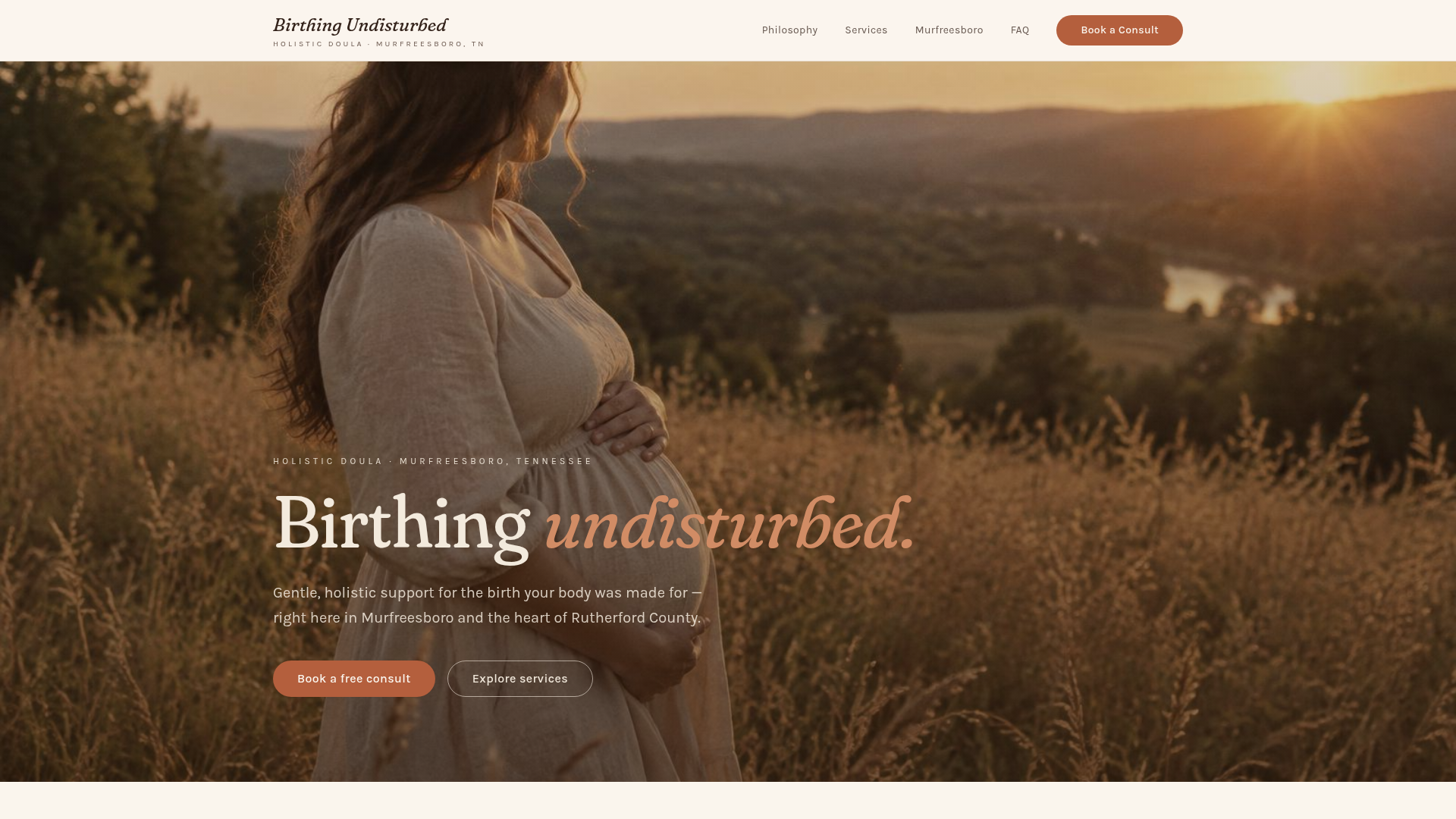
When people start planning for labor, they often focus on the clinical details: which hospital or birth center, who will attend, what pain relief options are available. These are important, but they overlook one of the most powerful influences on how labor unfolds. The physical and emotional space where a woman gives birth can shape her hormone levels, her sense of safety, and even the progress of labor itself. A calm birth environment is not a luxury or a trend. It is a practical tool that supports the body’s natural ability to birth.
Your body knows how to give birth. But that knowledge depends on feeling safe and unobserved. When a woman feels watched, judged, or rushed, her body releases stress hormones that can slow or stall labor. A calm birth environment helps keep those stress hormones low and the labor hormones, oxytocin, endorphins, prostaglandins, flowing. This is not about creating a spa-like retreat. It is about removing the triggers that put the body into a state of high alert.
What makes a space feel safe during labor
Safety during birth is not the same as safety during surgery. In a hospital operating room, safety means sterile surfaces, bright lights, and constant monitoring. During labor, safety means the woman feels private, warm, and unbothered. She needs to know that she will not be interrupted, that the people in the room are calm and trustworthy, and that she can move, vocalize, or rest without explanation.
Lighting is a good place to start. Harsh overhead lights can feel like an interrogation. Dim, warm lighting signals to the brain that it is time to rest and release. If you are in a hospital or birth center that does not allow light modifications, bring battery-operated candles or a dimmable lamp. Even a cloth draped over a bright light fixture can soften the room.
Sound is another layer. A quiet room is better than a silent one. The natural sounds of a woman’s own breathing, the murmur of a trusted partner, the soft hum of a fan, these can be grounding. Loud monitors, beeping machines, or people chatting about unrelated topics break the spell. A calm birth environment includes controlling what enters through the ears as much as through the eyes.

Temperature and touch
Labor generates heat. A room that is too warm can feel suffocating, but a room that is too cold can cause shivering and muscle tension. The ideal temperature is cool enough to allow a woman to move without sweating, but warm enough that she does not need blankets. Having layers available, socks, a light sheet, a warm robe, lets her adjust moment by moment.
Touch also matters. Not everyone wants to be touched during labor, but the option to be held, stroked, or massaged should be there. The people in the room should be familiar and trusted. Strangers, even well-meaning ones, can raise the alert level. This is why doulas and midwives who build rapport before labor are so valuable. They are not strangers by the time birth day arrives.
How to build a calm birth environment in any setting
You do not need to give birth at home to create a calm birth environment. Even in a busy hospital room, you can shape the space. Start by talking to your care provider ahead of time about what matters to you. Many hospitals are happy to dim lights, reduce unnecessary entries, and let you bring personal items.
Bring a bag with items that signal safety to your nervous system. That could be a familiar pillow, a playlist of songs that calm you, a photograph, or a piece of fabric from home. These objects are not decorative. They help your brain remember that you are in a safe place, even when the room itself feels clinical.
Limit who is in the room. A calm birth environment is not a party. Every extra person adds their own energy, their own tension, their own needs. If you feel like you have to perform or manage anyone else’s feelings, the environment is not calm. It is okay to say no to visitors, even close family. The people in the room should be there to support you, not to witness the event.
Consider the scent of the room. Aromatherapy can help, but strong smells can also trigger nausea during labor. If you use essential oils, choose simple scents like lavender or clary sage and use them in a diffuser or on a cotton ball, not directly on the skin. Test them before labor to make sure they work for you.
Movement and position
A calm birth environment also allows for free movement. If the space is too small or cluttered, you cannot shift positions easily. Clear the floor of bags, cords, and extra furniture. Leave room for walking, swaying, squatting, and leaning. Many women naturally want to move during labor. A space that supports that motion feels safer than one that forces stillness.

If you are using a hospital bed, ask for the bed to be lowered as far as possible. You can also ask for a birth ball, a stool, or a squat bar. These tools let you change position without leaving the room, which helps you stay in your own rhythm.
The role of the people in the room
A calm birth environment is not just about the physical space. The people in the room are part of the atmosphere. Their voices, body language, and energy all affect the woman’s nervous system. A partner who is tense, pacing, or checking a phone can create a sense of urgency. A doula or midwife who speaks in a low, steady voice can bring the room back to center.
It helps to have a plan for communication. Some couples use a code word or a hand signal to say “I need quiet” or “stop talking.” This keeps the atmosphere from being filled with questions and directions at a time when the laboring woman cannot process language easily. Silence, or simple sounds, often work better than words.
If you are supporting someone during labor, watch your own face. A calm expression, relaxed shoulders, and slow breathing can be contagious. If you look worried, she will feel worried. A calm birth environment depends on everyone in the room being grounded.
What about unexpected interventions?
No birth goes exactly as planned. Sometimes a transfer to the hospital, a change in position, or a new care provider becomes necessary. A calm birth environment is not fragile. It can be rebuilt in a new room. The principles are the same: dim the lights, reduce noise, limit people, use familiar objects, and keep the focus on the woman’s comfort and privacy.
The most important thing is that the woman feels she has some control over her environment, even when other things are out of her hands. That sense of agency matters for her emotional well-being and for the birth itself. A woman who feels powerless is more likely to have a long, difficult labor. A woman who feels in charge, even in small ways, has a better chance of a straightforward birth.
Practical steps to start now
If you are planning a birth, start thinking about the environment early. Visit the place where you will give birth. Notice the lights, the sounds, the smells. Ask what you can bring and what you can change. Talk to your partner and your doula about what a calm birth environment looks like to you. Write it down. Practice setting it up in your mind so that when labor starts, you can focus on the work of birthing, not on the room.
Here are a few concrete things you can do:
- Dim the lights or cover bright fixtures with a cloth or towel.
- Bring a small bag of comfort items: a soft blanket, a favorite pillow, a photo, or a candle.
- Make a playlist with slow, repetitive music or natural sounds. Avoid songs with sudden changes in volume or tempo.
- Set a ground rule: no one in the room speaks about anything other than the labor unless the laboring woman starts the conversation.
- Keep the door closed and post a sign asking for quiet and privacy. Most staff will respect it.
A calm birth environment is not about perfection. It is about intention. Every small choice you make to reduce noise, soften light, and limit distractions adds up. Your body will respond to that safety. And when your body feels safe, it can do what it was made to do.